1. Think in three tiers, not one hero SKU
Tier | Role | Typical configuration | Main buyer |
Entry / volume | Win price-led tenders and fast-moving retail | 3-function exposed set, polished chrome or brushed nickel, solid brass body, manual mixer, rain head + hand shower | Volume retail, housing projects, price-led tenders |
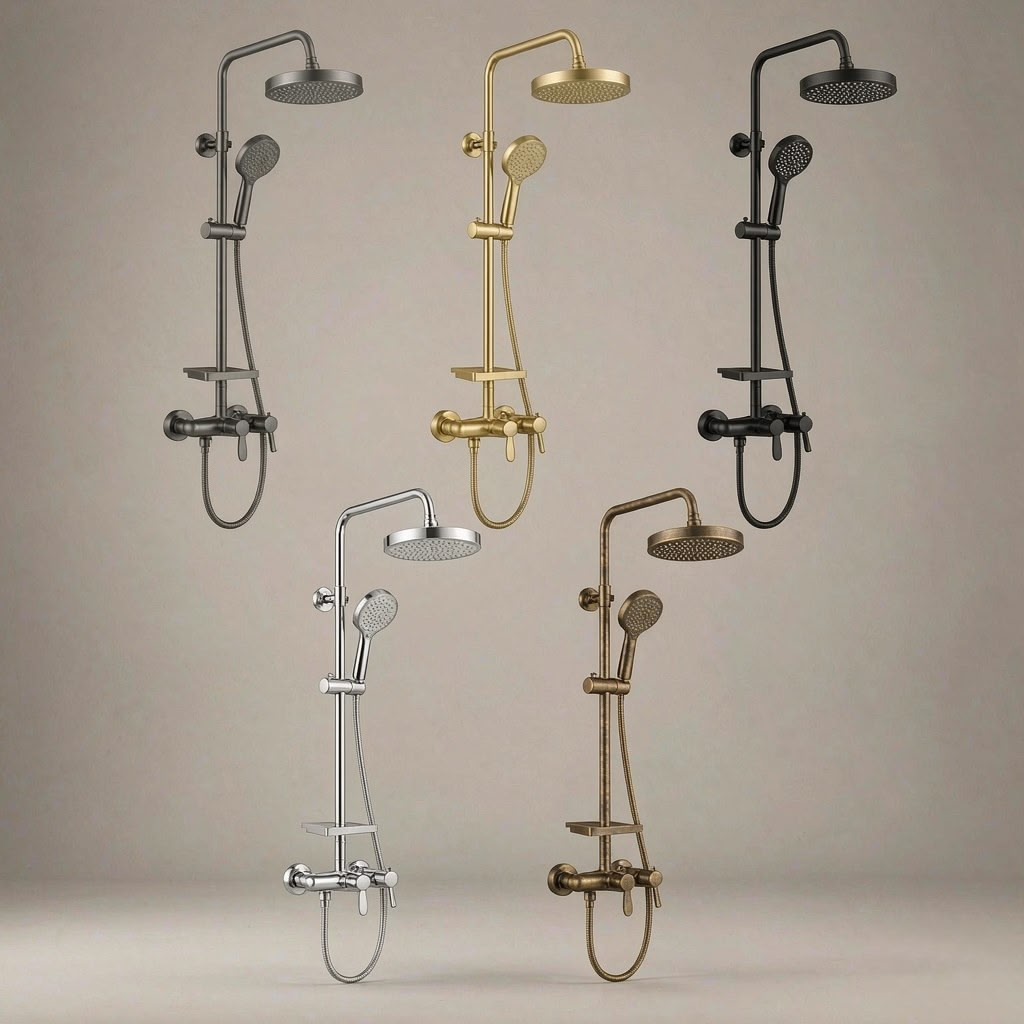
Core / margin | The profit engine of the catalogue | 3–4 function sets in gun grey, brushed gold, matte black or cream white; storage shelf, bidet spray gun, round or square rain head; concealed options | Showrooms, renovation retail, mid-market apartments |
Premium / specification | Win hospitality and upscale projects | Thermostatic mixers, digital display or piano-key sets, polished gold, concealed systems with tub spout, freestanding bathtub faucet | Hotels, villas, upscale developments |
A tier plan is a commercial tool, not a catalogue order. Set the price bands from your own sell-through data and local competition, then brief the supplier to fill them. Resist the temptation to stock every finish in every tier at launch; depth in the core tier usually outperforms breadth in the entry tier.
2. Build the range on a shared platform
The most profitable ranges are deliberately boring behind the scenes. Where possible, keep the same valve body, cartridge, hose and seal platform across tiers and finishes. One cartridge and one seal kit means fewer spare SKUs, faster service and less working capital tied up in parts that never move.
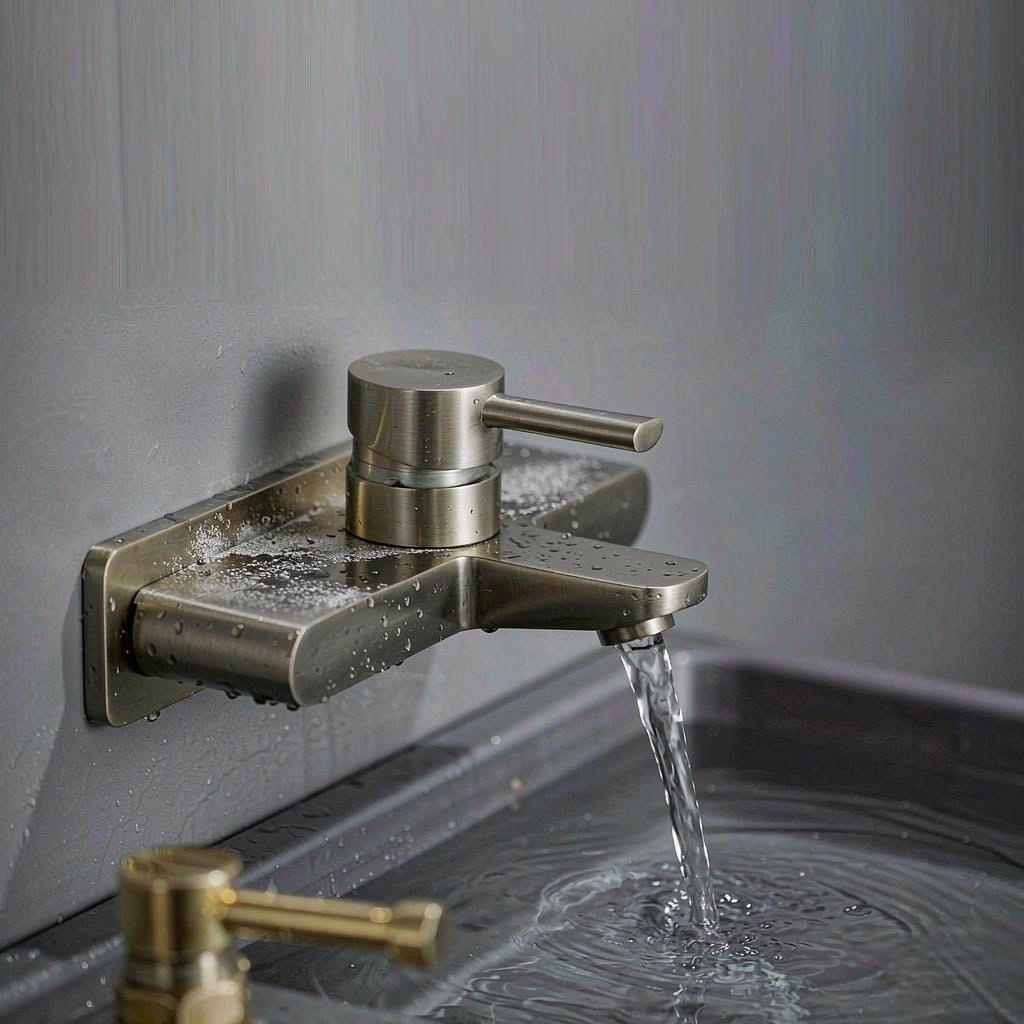
Then extend the finish across the whole bathroom, not just the shower: basin faucet, bidet sprayer, angle valve, shelf, towel rail and accessories. A customer who buys a gun-grey shower set in the first quarter should be able to add the matching basin tap two quarters later. That continuity is the strongest argument for OEM/ODM sourcing from one partner instead of buying each category from a different factory — consistent finish, consistent threading, consistent packaging and one point of contact.
Before committing to a full container, ask for a physical finish set (one of each colour on the same body) and keep an approved sample as the reference for every re-order. Batch-to-batch colour consistency is far easier to agree in advance than to argue about after delivery.
3. Retail showroom vs. hospitality project: different specifications
Retail / wholesale | Hotel & contractor projects | |
Packaging | Retail carton, display-friendly, barcode | Bulk / protective packing, phase labels |
Finish breadth | Several finishes to drive showroom choice | One finish across every unit |
Priority | Look, unboxing, price point | Durability, uniform spec, maintenance |
Documents | Warranty card, consumer manual | Spec sheet, test reports, maintenance schedule |
Spare parts | Stocked for walk-in service | Contracted spare-parts kit per phase |
Order pattern | Mixed container of many SKUs | Scheduled deliveries by construction phase |
The same product can serve both channels, but the packing, documentation and spare-parts commitment cannot. Quote them separately.
4. From sample to repeat order: an OEM/ODM workflow
1.Range brief — destination, channel, water conditions, pressure range, thread standard, three target price bands, estimated annual volume per tier.
2.Specification lock — body material, cartridge, finish, minimum operating pressure, dimensions, BSP/NPT threads, included components, markings.
3.Sample and approval — physical samples, finish sign-off, and a pressure test on the supply your customers actually have.
4.Branding and packaging — logo method, carton artwork, barcode, manual language, and the origin / manufacturer markings your destination's conformity scheme requires.
5.Trial order — a mixed container across the three tiers to test real sell-through before committing to volume.
6.Production QC — approved sample as reference, internal inspection, packing photos, pre-shipment conformity assessment where required.
7.After-sales loop — spare-parts kit, reorder list, and a record of what actually sold, feeding the next range plan.
MOQ, tooling, lead time and payment terms vary by finish and by how much of the product is customised. Get them confirmed in writing for your specific configuration rather than working from a general catalogue statement.
5. What to put in the first enquiry
- Destination country and port
- Channel: wholesale, showroom, contractor, or hospitality
- Three target price bands and estimated annual volume per tier
- Water source, pressure range and thread standard
- Shortlisted finishes
- Whether you need private-label packaging and logo application
- The conformity scheme your market requires (see our import documentation guide)
Send that brief and we will come back with a proposed range map, matching finishes across categories, a spare-parts list and samples for evaluation.
Next step: request a range proposal and sample set for your market.
Related reading: [Post 1 title — specifying fittings for hard water and low pressure] and [Post 2 title — import documents and landed cost].
Frequently asked questions
Should I launch with one finish or several? Start with the two finishes that cover the widest share of your market, then extend using the same platform. Breadth without sell-through data ties up cash.
Can I mix tiers in one container? Usually yes, and it is the sensible way to run a trial order. Confirm packing and marking requirements per SKU with your broker.
How do I keep colour consistent across batches? Approve and retain a physical master sample, specify the finish process in the PO, and reference that sample in every repeat order.
Do hotel tenders need different specifications? Typically they need uniform finishes, documented test reports, a spare-parts commitment and phased delivery — even when the product itself is identical to your retail line.